
 Walk into a great co-working space and you just feel it. The energy is right. The layout makes sense. There’s a spot for every kind of work — whether you need to smash through emails, run a client call, or sit with your team around a big table. It feels professional but not stiff. Creative but not chaotic.
That feeling doesn’t happen by accident. It’s the result of really thoughtful fit out planning.
If you’re setting up a co-working space in Melbourne — or you’re an existing operator thinking about a refresh — this guide is for you. We’re going to walk through what’s trending in co-working fit out design right now, and more importantly, what you actually need to plan for before a single wall goes up.
What Makes a Co-Working Space Fitout Different From a Regular Office Fitout?
This is the question most operators don’t ask until they’re halfway through a build and things start going sideways.
A traditional office fitout is designed for one business, one team, one way of working. A co-working fitout has to work for dozens — sometimes hundreds — of completely different people, all at the same time.
A graphic designer needs different things from a space than a financial consultant. A startup team of four needs something different to a freelance copywriter working alone. And all of them are paying for the right to use your space — so if it doesn’t work for them, they leave.
That changes everything about how you approach the fitout.
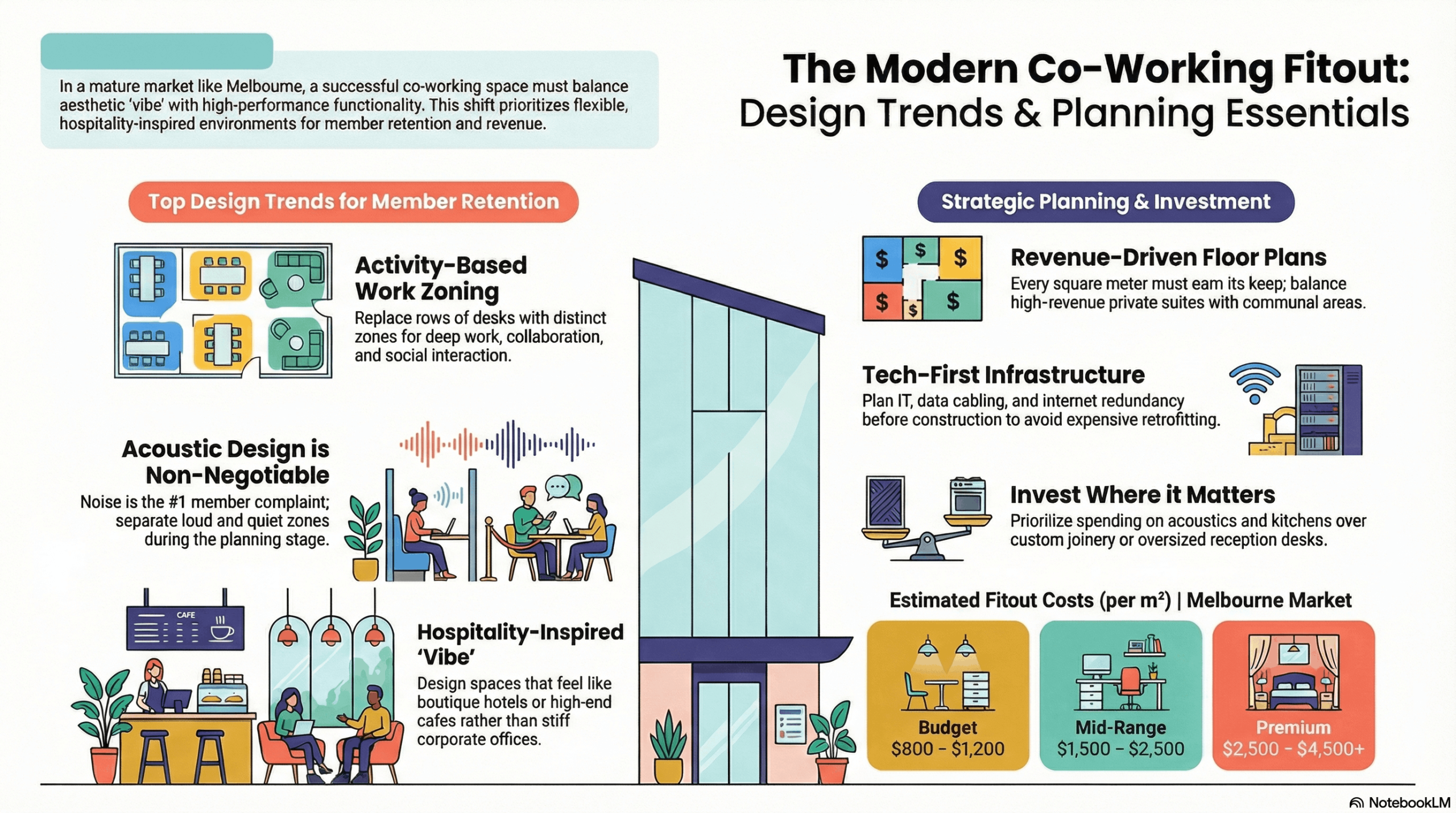
Flexibility becomes your number one priority. Durability matters more than it does in a private office because your floors, furniture, and finishes take a hammering every single day. And every square meter needs to earn its keep, because your revenue depends on how well the space is used.
Co-working fitouts in Melbourne are also competing hard right now. The market has matured. Members have options. A co-working space that looks dated, sounds like a call centre, or runs out of meeting room space by 10am on a Tuesday isn’t going to hold onto its members for long.
What’s Happening in Melbourne’s Co-Working Market Right Now?
Melbourne’s flexible office market has changed a lot since 2020.
The pandemic shifted how businesses think about office space. Long leases on large dedicated offices started to look risky. Remote and hybrid working became the norm for huge numbers of teams. And as a result, demand for flexible co-working space — from solo freelancers all the way up to corporate teams of 20 or 30 — went through the roof.
Today, co-working spaces in Melbourne aren’t just for startups and freelancers anymore. Professional services firms, legal practices, tech companies, and even government agencies are taking up desks and private suites in shared office environments. They want professional spaces without the long-term commitment.
What do today’s Melbourne co-working members actually expect? A lot more than they used to.
Fast, reliable internet is a given. So is a good coffee setup. But beyond the basics, members are now looking for spaces that feel genuinely designed — spaces with personality, with variety, with the right acoustic environment, and with technology that just works.
If your co-working fitout doesn’t deliver on those expectations, your members will find one that does.
Co-Working Fitout Trends You Need to Know About
1. Activity-Based Working Zones — Not Just Rows of Desks
The days of fitting as many desks as possible into a floor plate are over.
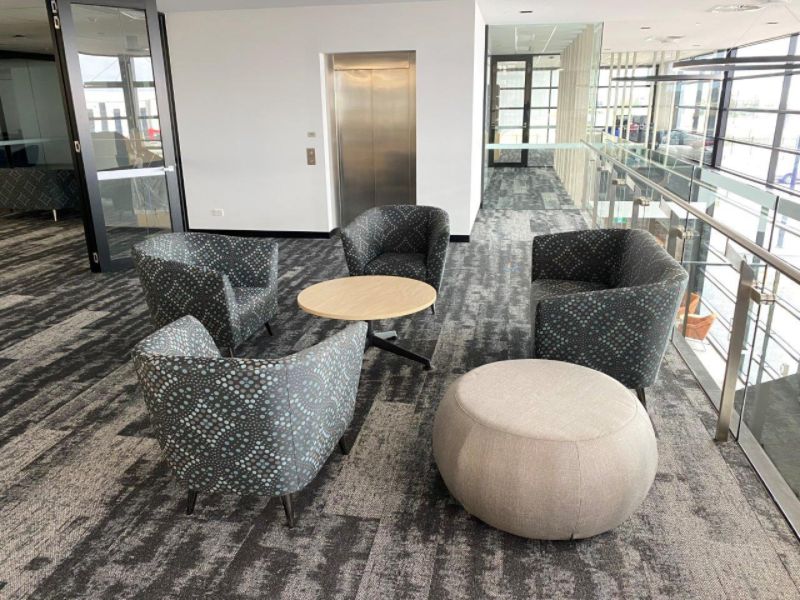
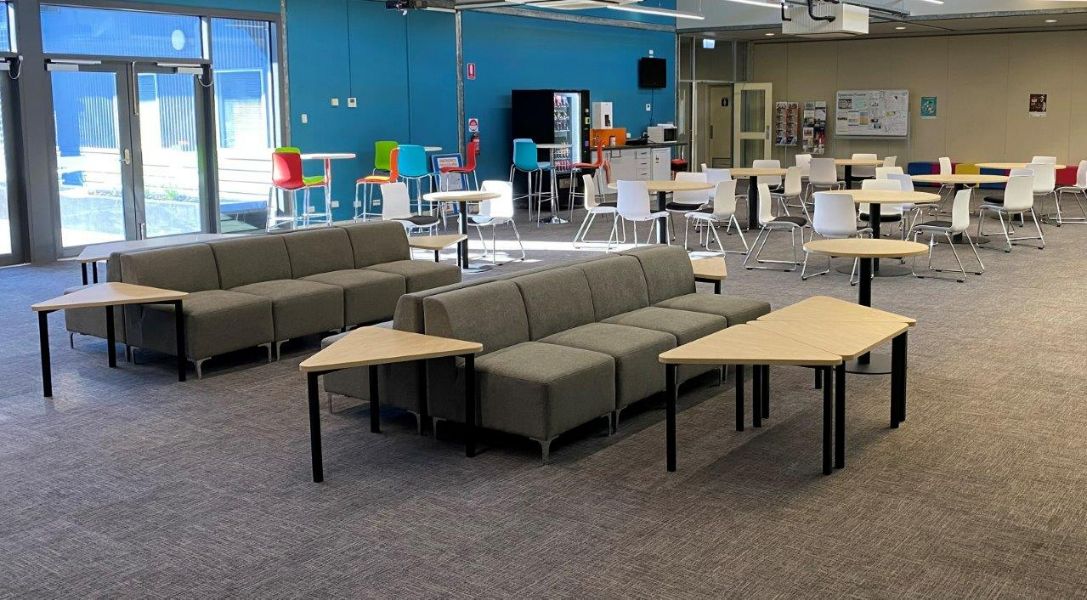
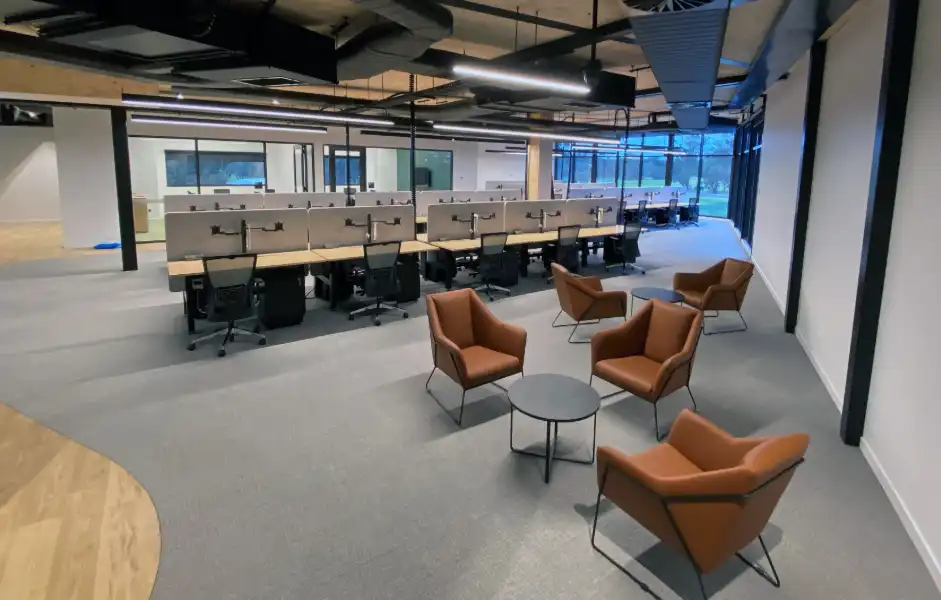
The best co-working spaces in Melbourne today are designed around zones — distinct areas for different types of work. A focused quiet zone for deep work. A collaborative zone with bigger tables and writable surfaces. A casual lounge area for informal chats. Phone booths or acoustic pods for calls. A social kitchen area where people actually want to spend time.
When members can move through a space and find the right environment for whatever they’re working on, they use the space more. They stay longer. They renew their memberships.
Activity-based zoning in your co-working fitout isn’t a luxury feature — it’s a retention strategy.
2. Acoustic Design — Still the Most Underestimated Part of Any Co-Working Fitout
Ask any co-working operator what their members complain about most. Nine times out of ten, the answer is noise.
Open co-working floors can be incredibly loud. One person on a speakerphone, a team having a stand-up meeting, a sales rep doing cold calls — any of these can destroy the concentration of everyone around them.
Smart acoustic design in a co-working fitout means thinking about this at the floor plan stage — not trying to fix it with a few panels after the fit-off. It means separating loud and quiet zones from the start. Using acoustic ceiling tiles and wall panels in the right places. Incorporating booth seating and enclosed pods for phone calls and video meetings. Choosing carpet or acoustic flooring in focused work areas.
The cost of poor acoustic design isn’t just a few member complaints. It’s churn. And churn kills a co-working business faster than almost anything else.
3. Biophilic Design — Plants, Light, and Natural Materials
Melbourne offices have been embracing biophilic design for years, and co-working spaces are leaning into it hard.
Biophilic design means incorporating natural elements into the built environment — plants, timber finishes, stone textures, natural light, water features. The research behind it is solid: people work better, feel less stressed, and report higher satisfaction in spaces that connect them to nature in some way.
For co-working operators, biophilic design also creates a genuine point of difference. A living green wall behind the reception desk, natural timber joinery in the kitchen, large windows left unobstructed to maximise light — these elements make your space memorable. People post them on Instagram. They mention them when they recommend your space to a colleague.
It doesn’t have to be expensive. Even well-placed plants and warm timber accents can shift the feel of a space completely.
4. Technology-Integrated Spaces
In 2025, a co-working space without solid tech infrastructure is a co-working space with a waiting list of members about to cancel.
Internet redundancy — multiple connections from different providers — is fast becoming the minimum standard for professional co-working fitouts in Melbourne. One outage on one line shouldn’t take down the whole floor.
Smart desk and meeting room booking systems are now expected. Members want to book a desk or a room from their phone, see real-time availability, and walk in knowing their space is ready. These systems also give operators incredibly useful data on how the space is actually being used.
AV-enabled meeting rooms with reliable video conferencing, good microphones, and presentation screens are non-negotiable for any co-working space targeting professional members. If someone can’t run a client video call from your meeting room without technical drama, they won’t book it again.
Access control, smart lighting systems, and app-controlled HVAC are also becoming standard in new co-working fitouts — and they’re worth building in from the start, because retrofitting them later is expensive and disruptive.
5. Hospitality-Inspired Design — The Office That Feels Like a Destination
The most successful co-working spaces we see in Melbourne right now have borrowed heavily from the hospitality industry.
Think boutique hotel lobby, not corporate office. A reception area that feels welcoming. A kitchen that feels like a real café. Soft furnishings that make people want to sit down and stay a while. Curated artwork. Good playlists. A space that has a vibe.
This shift towards hospitality-inspired co-working design is a direct response to what members are comparing your space to. They’re not comparing it to their old corporate office. They’re comparing it to the café down the street, the hotel lounge they worked from last week, and the co-working space their friend in the CBD raves about.
The kitchen and lounge area is now the single most important communal space in any co-working fitout. It’s where community gets built, where conversations happen between members who wouldn’t otherwise meet, and where people decide whether they feel at home in your space or not.
Invest here. It pays back.
6. Modular and Flexible Furniture Systems
Co-working spaces change. Members come and go. Demand for different space types shifts over time. What works perfectly this year might need to be reconfigured next year.
Modular furniture systems — desks, partitions, and storage that can be rearranged and reconfigured without calling a contractor — give co-working operators the flexibility to respond to those changes quickly and cheaply.
Movable acoustic partitions that can divide or open up a space in minutes are becoming a staple of smart co-working fitout design. So are lightweight collaborative tables that can be pushed together for a workshop and separated for individual use.
When you’re speccing furniture for a co-working fitout, think about how it can be used in three or four different configurations. Furniture that only works one way is a liability in a flexible workspace.
7. Private Offices Within Shared Spaces
Here’s a trend that’s been growing steadily and shows no sign of slowing: demand for small, lockable private offices inside co-working environments.
Businesses that don’t want the commitment of a full commercial lease — but also need more privacy than an open hot-desk provides — are snapping up private suites in co-working spaces. A lockable room for three to six people, with their own branding, their own storage, and access to all the shared amenities of the co-working floor.
For operators, private offices are one of the most profitable parts of the floor plan. Higher revenue per square metre than open desking, longer membership commitments, and lower churn.
Getting the balance right between private suites, dedicated desks, and open hot-desks is one of the most important space planning decisions in a co-working fitout. There’s no single formula — it depends on your target market, your building, and your revenue model.
8. Wellness and Mental Health Spaces
This one has moved from “nice to have” to “members actively look for it.”
Quiet rooms — genuinely quiet, properly sound-isolated spaces where someone can decompress, meditate, or just sit in silence for ten minutes — are appearing in more and more Melbourne co-working fitouts.
Standing desks and ergonomic chair setups are now expected as standard in any professional co-working environment. Members who spend eight hours a day in your space will notice the difference — and they’ll feel it in their bodies if you skimp on this.
Natural light is one of the biggest wellness factors in any workspace, and it’s worth fighting for at the design stage. Don’t let meeting rooms and phone booths block the light from reaching the main work floor. Get your designer to map daylight access before the layout is finalised.
9. Sustainability and Eco-Conscious Fitout Design
Melbourne businesses — and their employees — care more about sustainability than they ever have. And that care extends to the spaces they choose to work in.
Sustainable fitout choices for co-working spaces include recycled and low-VOC materials, energy-efficient LED lighting systems, water-saving fixtures, and HVAC systems that are sized correctly for actual usage patterns rather than worst-case assumptions.
For co-working operators, sustainability credentials aren’t just about doing the right thing. They’re a genuine marketing advantage with the kind of members who are actively looking for alignment between their own values and the spaces they choose to work in.
10. Local Identity and Brand Character
The co-working spaces that build the strongest communities in Melbourne are the ones that feel like they belong here.
Not a generic shared office that could be anywhere in any city. But a space that reflects Melbourne’s creative culture, that uses local artists and suppliers, that references the character of its neighbourhood — whether that’s the industrial heritage of Collingwood, the creative energy of Fitzroy, or the professional character of the CBD.
Strong interior branding — through colour, materials, artwork, and signage — creates a sense of identity that members buy into. They’re not just renting a desk. They’re part of something. That feeling keeps them coming back.
Planning Your Co-Working Space Fitout — What You Need to Nail Before Construction Starts
Start With Your Business Model, Not Your Mood Board
We’ve seen co-working fitout projects go sideways because operators fell in love with a design before they’d worked out their numbers.
Your floor plan is a revenue plan. Every square metre needs to be earning its keep. Before you finalise your layout, work out your membership mix — how many hot-desks, dedicated desks, private offices, and meeting rooms — and make sure the numbers stack up against your operating costs.
How many members can your space support comfortably? (Not technically — comfortably.) What’s your revenue per seat at target occupancy? Does your layout support the membership types your target market actually wants?
Answer these questions first. Then design.
Space Planning for Flexibility and Profitability
The best co-working layouts in Melbourne balance three things: member experience, operational efficiency, and revenue per square metre.
Open hot-desking generates the lowest revenue per seat but creates energy and community on the floor. Private offices generate the highest revenue but need to be in the right location within the floor plan (away from the loudest areas, with natural light where possible). Meeting rooms don’t generate much direct revenue but they’re a key retention driver — members who can’t book a meeting room when they need one look for spaces that have them available.
A rough starting point for a mixed co-working space: 50–60% open desking, 20–30% private offices, 10–20% meeting rooms and phone booths, 10–15% communal and kitchen areas. But adjust this based on your target market and building.

Technology Infrastructure — Decide This Before You Pour the Slab
This is the single most common planning mistake in co-working fitouts.
IT and data infrastructure needs to be designed before construction starts — not added as an afterthought. Once walls are up and ceilings are in, retrofitting data cabling, server room locations, and access control systems is expensive and disruptive.
Work with your IT provider and your fitout contractor together at the design stage. Know where your server room will be, where every data point will land, how meeting room AV systems will be connected, and how your access control system integrates with your door hardware.
Internet redundancy — two independent connections from two different providers — should be considered a baseline for any professional co-working fitout in Melbourne. One outage should never take down the whole floor.
Choosing Finishes That Last in a High-Traffic Environment
Co-working spaces are hard on finishes. Hundreds of people a week rolling chairs, dragging bags, spilling coffee, and scuffing walls.
Choose flooring that looks great and survives. Polished concrete with area rugs, commercial-grade vinyl plank, or carpet tiles (which can be replaced section by section when damaged) all work well in co-working environments.
For walls, matte or eggshell paint in high-traffic areas is much easier to touch up than gloss. Joinery surfaces need to be durable — think laminate over veneer in kitchen and reception areas.
Where should you spend on premium finishes? Reception, the kitchen, and any areas visible from the entry. First impressions matter enormously. Where can you pull back? Back-of-house storage, utility areas, and spaces members rarely see.
Acoustic Planning — Do This at the Floor Plan Stage
We said it in the trends section and we’ll say it again here because it matters that much.
Acoustic planning is not something you add after the fitout is built. It’s something you design in from the start.
At the floor plan stage, separate your loud zones (kitchen, social areas, collaborative spaces) from your quiet zones (focused desking, private offices). Use acoustic ceiling tiles across the open floor. Plan for phone booths and enclosed pods rather than hoping people will find a quiet corner.
The cost of good acoustic design in a co-working fitout is a fraction of the cost of member churn caused by a noisy, unusable workspace.
Lighting for Productivity and Atmosphere
Good lighting in a co-working space does two things at once: it helps people work better, and it makes the space feel great.
Maximise natural light across your floor plate. Keep meeting rooms and enclosed spaces away from windows where possible. Use task lighting at workstations and warmer, dimmable ambient lighting in social and lounge areas.
Lighting control systems that adjust automatically based on time of day and occupancy are worth the investment in a larger co-working fitout — they reduce energy costs significantly over time and create a more comfortable environment without anyone having to think about it.
Amenities — Where Members Decide to Stay or Leave
Your kitchen area and bathrooms are more important than most operators realise.
A co-working space with a cramped, poorly designed kitchen — or bathrooms that feel like they belong in a 1990s office block — sends a message to members about how much you value their experience.
The kitchen should be a generous, well-lit space with enough bench space, storage, and appliances for the number of members using it. If your budget allows, a café-style setup with good coffee equipment is worth every cent — it’s what people talk about when they recommend your space.
End-of-trip facilities (showers, bike storage, lockers) are increasingly expected by members who cycle or run to work. If your building supports these, include them.

How Much Does a Co-Working Space Fitout Cost in Melbourne?
Co-working fitouts typically cost more per square metre than standard commercial office fitouts. The reason is straightforward — more zones, more variety, higher-spec communal areas, more complex technology infrastructure, and the need for durable commercial-grade finishes throughout.
Rough cost ranges for co-working fitouts in Melbourne:
- Budget co-working fitout: $800–$1,200/m²
- Mid-range co-working fitout: $1,500–$2,500/m²
- Premium co-working fitout: $2,500–$4,500+/m²
These figures vary based on your building condition, the complexity of your design, your technology requirements, and furniture specifications.
Where co-working operators tend to overspend: custom joinery features that members barely notice, oversized reception desks, and excessive feature walls.
Where they tend to underspend (and regret it): acoustic treatment, IT infrastructure, kitchen quality, and meeting room AV.
The most useful question to ask when making fitout investment decisions is: will this improve member experience enough to reduce churn or increase membership rates? If the answer is yes, it’s probably worth it.
Common Mistakes Co-Working Operators Make With Their Fitout
Skimping on acoustic design. The number one cause of member complaints. Fix it at the design stage or pay for it in churn.
Building for today, not for growth. Design your infrastructure (data, power, HVAC) to handle 20–30% more capacity than you need on day one.
Not enough storage. Members accumulate stuff. If there’s nowhere to put it, they’ll leave it everywhere — and your space will look messy within weeks.
Choosing furniture based on looks alone. A beautiful chair that lasts two years in a high-traffic co-working environment is a bad investment.
Underestimating IT lead times. Equipment can take weeks to arrive. Order early.
Designing without a revenue model. Every layout decision has a revenue implication. Know your numbers before you lock in your floor plan.
Not getting the right fitout specialist involved early enough. Co-working fit outs are specialist work. Not every commercial fit out company has done them before. Ask about relevant experience before you sign anything.
How to Choose the Right Fitout Company for Your Co-Working Space
Co-working fitouts are genuinely different to standard commercial office fitouts. Not every fitout company has the experience to pull them off well.
When you’re evaluating fitout companies for your co-working project, ask specifically about their experience with flexible and shared workspace environments. Ask to see examples. Talk to the operators of spaces they’ve fitted out. Ask how they approach acoustic planning, technology integration, and high-traffic finish selection.
Look for a company that offers end-to-end project management — design, construction, furniture, and technology coordination under one roof. In a co-working fitout, the number of moving parts is significant. You want one point of contact who is responsible for the whole outcome, not five different contractors pointing fingers at each other when something isn’t right.
And always, always get a detailed scope of works before signing anything. Know exactly what’s included and what isn’t. The cheapest quote is rarely the cheapest outcome.
Ready to Fit Out Your Melbourne Co-Working Space? Let’s Talk.
At Progressive Corporate, we’ve been designing and building commercial office fit outs across Melbourne for over 27 years. We’ve worked with businesses of all kinds — from corporate headquarters to creative studios — and we understand what it takes to build a space that people genuinely want to work in every day.
If you’re planning a co-working space fit out in Melbourne — whether you’re starting from scratch or refreshing an existing space — we’d love to be part of it.
We offer a free consultation where we’ll look at your space, talk through your business model and membership mix, and give you an honest picture of what’s involved before you commit to anything.
One call can save you months of second-guessing.
Get in touch with our team today:
📞 (03) 7018 0761 📧 sales@progressiveoffice.com.au 📍 1 Forbes Close, Knoxfield VIC 3180
We’d love to help you build a co-working space Melbourne businesses actually want to be part of.